
A Personal Note to Families Caring for Elders At-Home
Updated: Dec 31, 2025

When people talk about ageing, they usually talk about medical needs—medicines, mobility, doctor visits.
But after years of building Companions and working closely with elders and their families, I can tell you this with certainty:
Loneliness is the most common—and most underestimated—problem seniors face.
I’ve met elders who are physically stable, financially secure, and medically monitored… yet deeply unhappy. Not because of illness—but because days pass without meaningful human connection.
This is why elder care, to me, begins with companionship.
The Silent Reality of Loneliness in Old Age
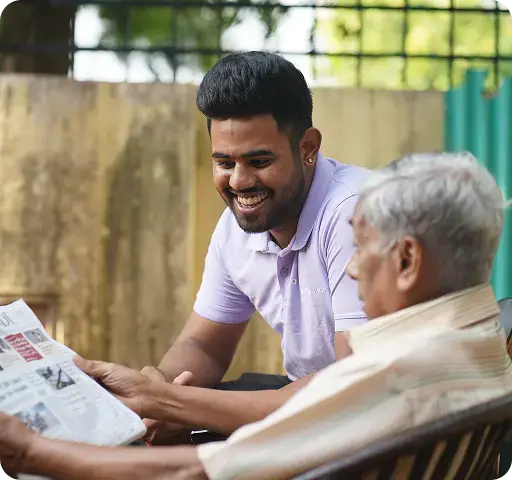
Loneliness rarely announces itself loudly. It shows up quietly—in longer TV hours, skipped meals, fewer conversations, and declining interest in life.
Over time, I’ve seen how isolation affects elders in ways families don’t immediately notice:
Mood slowly dips into sadness or anxiety
Memory becomes less sharp
Physical movement reduces
Motivation fades
Loneliness isn’t just emotional—it becomes physical.
This is why modern elder care services must address more than health charts. They must address the human need to be seen and heard.
👉 This belief is central to how we approach elder care at Companions:https://www.companions.in/elder-care
Why Companionship Is Not a “Nice-to-Have” in Elder Care

Many families initially think of companion care as optional.
My experience says otherwise.
A companion is often the person who:
Notices subtle mood changes
Encourages movement through simple walks
Listens to stories that elders feel no one else has time for
Brings routine and structure back into the day
True elder care at home is not just about assistance—it’s about engagement.
Why Families Often Notice the Impact Too Late
One of the hardest moments for me is when families say:
“We didn’t realise how lonely they were.”
Loneliness doesn’t show up on medical reports. But by the time its effects become visible, elders may already be withdrawn, weak, or depressed.
That’s why I always encourage families to think of companionship as preventive elder care, not reactive support.
👉 Learn more about our elder care and companionship approach here:https://www.companions.in/elder-care
What We Focus On at Companions (As a Founder)
If there’s one principle that guides our work, it’s this:
Care must feel human before it feels professional.
Our companions are trained not just to assist—but to engage, encourage, and connect. We customise companionship around personality, interests, and comfort—not a generic checklist.
Because elders don’t need someone who does things for them.They need someone who does things with them.
A Personal Note to Families Reading This
If your parent or grandparent is quiet lately…If days feel repetitive for them…If they say “I’m fine” but seem less like themselves…
Please don’t ignore it.
Loneliness is not a normal part of ageing—it’s a solvable one.
The right elder care with companionship can restore joy, dignity, and connection in ways medicine alone never can.
If you’d like to explore thoughtful, compassionate elder care, I invite you to learn more about what we do at Companions.
Sometimes, the most powerful form of care is simply being there.

Comments