
India's Grey Wave: How Home-Based Elder Care Is Moving from Obligation to Industry

The country's 140-million-strong senior population is reshaping healthcare, family dynamics, and a new generation of startups — one caregiver at a time
There is a particular kind of silence that settles over a Chennai apartment on a Tuesday afternoon. The children are at their desks in Bengaluru or Bahrain. The grandchildren are in school. And an 81-year-old woman named Kamala sits in the same chair she has occupied for forty years, watching a ceiling fan turn, wondering if she has taken her blood pressure tablet.
This scene — replicated across millions of Indian homes every day — is quietly becoming one of the country's most consequential demographic and economic stories. India is ageing. Not slowly, not gracefully, but at a pace that is beginning to outstrip the systems built to support it. And in the gap between what families can provide and what institutions offer, a new industry is being born.
The Demographic Reckoning
India's elderly population, those aged 60 and above, currently stands at approximately 140 million, roughly the combined population of France and the United Kingdom. By 2050, that number is projected to cross 320 million, according to United Nations estimates. What makes this particularly consequential is the simultaneous collapse of the joint family system, for centuries, India's primary social security net.
Urbanisation is the engine driving this rupture. Over the last three decades, working-age Indians have migrated to cities in unprecedented numbers, leaving behind aging parents in towns and villages, or in urban apartments that feel increasingly vast. The 2011 Census (the most recent to fully capture living arrangements) already showed that over 35% of elderly Indians lived without their adult children. That figure has almost certainly climbed since.
The consequences are not merely emotional. Falls, medication errors, malnutrition, and untreated chronic illness proliferate when seniors live without adequate supervision. India's healthcare infrastructure, built largely around acute and hospital-based care, is structurally ill-equipped to handle the long, slow arc of geriatric needs. The average government hospital has no geriatric ward. Most private hospitals have no incentive to create one.
Families, caught between filial duty and geographic reality, are beginning to reach for a third option: professionalised home care.

From Informal to Institutional: A Sector Takes Shape
For most of India's modern history, elder care at home meant one of two things: a family member who stayed back (almost always a woman), or an unverified domestic worker hired through word of mouth. The first model exacts an enormous cost in foregone careers and personal freedom. The second operates without training, accountability, or recourse.
The formalisation of home-based elder care as a service industry with trained professionals, structured pricing, and technology-enabled oversight is less than fifteen years old. The first wave of operators, many of them offshoots of hospital groups or nursing agencies, focused on post-operative home nursing: the relatively straightforward task of providing skilled medical support after a hospital discharge.
What is different today and what distinguishes the current generation of startups is an understanding that most elderly Indians do not need medical intervention at all. They need assisted daily living. Help with bathing, walking, eating, and taking medication. Someone to talk to. Someone to notice if things have changed.
This distinction, between clinical care and companionship-centred care, has quietly become the founding philosophy of some of India's most interesting elder care ventures.
Companions: Care as Infrastructure
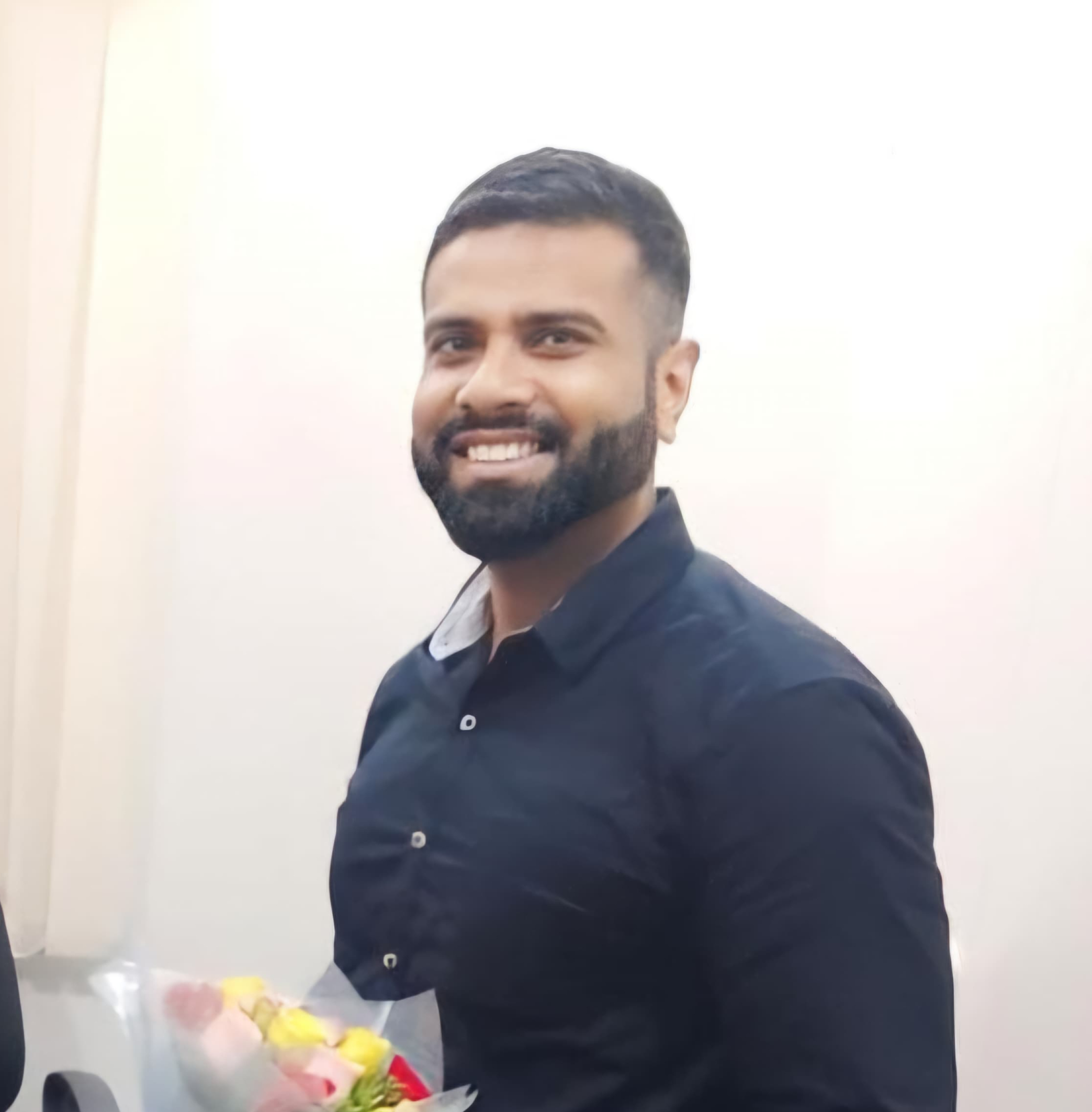
On a quiet street in Neelangarai, Chennai, a startup called Companions has spent the last several years building something that its founder, Arul Nambi, describes not as a business, but as an infrastructure problem that happens to have a business model.
Companions — accessible at www.companions.in — has served over 1,200 families and built a network of 600-plus verified caregivers across Chennai. Its services begin at ₹1,000 and span elder care, support for specially-abled children, care for the physically challenged, and assistance for the visually impaired. But Nambi's framing of the work is instructive.
"The Indian family hasn't abandoned its elders. It's been separated from them by geography and economics," Nambi explains. "What we're building is the connective tissue, a way for families to extend their care across distance, with people they can actually trust."
That word trust comes up repeatedly in any honest conversation about India's home care market. The dominant anxiety of families seeking in-home support is not the cost or the logistics. It is the fear of placing a stranger inside the intimacy of a parent's daily life. Companions attempts to address this through rigorous background verification of all caregivers, personalised care planning, and the kind of continuity that erodes when operators treat caregiving as a gig.
"Every senior is different. Someone with early-stage dementia needs a completely different approach than someone recovering from a hip replacement," Nambi notes.
"You can't create a standardised product and call it elder care. That's not care, that's just staffing."
The startup's model reflects this philosophy. Rather than deploying caregivers and stepping back, Companions maintains what it describes as ongoing support and regular check-ins with families, a feedback loop that keeps the quality of care from degrading over time, one of the endemic failures of the informal market.

The Technology Question
India's technology sector has a habit of projecting itself onto every social problem, and elder care has not been spared. Over the past decade, a parade of apps has promised to "Uberise" home nursing, create "Swiggy for caregivers," or deploy artificial intelligence to predict a senior's health trajectory from a wearable. Most have quietly failed.
The failure is instructive. Caregiving, particularly for the elderly, resists the frictionless, transactional logic of platform economics. A senior citizen does not want a different face at the door each week, matched to them by an algorithm. Their family does not want to lodge a complaint on an app. The intimacy of the work demands relational consistency that pure marketplace models cannot provide.
The startups that are finding traction are those that use technology to solve specific operational problems, such as caregiver verification, scheduling, and family communication, while keeping the human relationship at the centre of the service. Companions, for instance, supplements its home visits with safety hardware (cameras, mobility aids, stair climbers) that extend its oversight into the home environment, but positions these as support tools rather than substitutes for human presence.
The founder is clear-eyed about where technology's limits lie. "A camera doesn't notice that an elder is quieter than usual, or that she hasn't eaten her lunch. A trained, attentive caregiver does. Technology helps us be more consistent and transparent, but it doesn't replace the person in the room."

The Caregiver Economy
Any honest account of India's home care sector must grapple with its labour market, specifically, with the conditions of the people who actually provide the care.
India has a potential comparative advantage in caregiving: a large, young, English-literate population, many of whom have nursing or paramedical training, living in regions with limited formal employment options. The south, particularly Tamil Nadu and Kerala, has long exported caregivers to the Gulf and Southeast Asia. The domestic market, by contrast, has traditionally offered poor pay, no benefits, and no career trajectory.
This is slowly changing. Better-run operators have recognised that caregiver quality is the product. You cannot build a premium service business on a burned-out, underpaid workforce.
Companions, notably, does not charge caregivers registration fees, a practice still common among informal agencies that effectively sell workers' contact details to families. "We are not a commission-based agency," its model explicitly states. "We never ask for registration fees or half-month salary commissions." For workers in a sector long exploited by intermediaries, this is not a minor distinction.
The startup also provides basic training for candidates without formal nursing qualifications, creating a pathway into the sector for the many workers who are, in the founder's words, "kind, patient, and willing to help" but lack certified credentials. This upskilling function is informal as it is and is quietly addressing one of the sector's most binding constraints: a shortage of trained, job-ready caregivers relative to demand.
Market Size and the Investment Gap
The Indian elder care market is, depending on whom you ask, either dramatically underfunded or dramatically overhyped, and both descriptions contain some truth.
Conservative estimates place the addressable home care market at over ₹7,000 crore annually, with projections suggesting a compound annual growth rate of 15–20% through the next decade, driven by demographic tailwinds, rising incomes, and shrinking household sizes. Several larger players like Portea Medical, Care24, and Nationwide Homehealthcare have attracted institutional capital and attempted to scale across cities.
And yet the sector remains, by global standards, extraordinarily underpenetrated. In the United States, home health care is a $150-billion industry. In India, with a larger and faster-ageing population, formal home care services barely register in national health expenditure data.
Part of the explanation is cultural: the residual expectation, particularly in smaller cities and rural areas, that family members will provide care without financial compensation. Part is structural: India's health insurance ecosystem offers minimal coverage for home-based elder care, leaving families to pay entirely out of pocket. And part is political: elder care has rarely featured in the electoral calculus of either major national party, despite the numbers that would seem to command their attention.
"The government talks about elderly welfare, but it rarely funds anything that meets people where they actually are in their homes," observes the Companions founder.
"There is no equivalent of the ASHA worker scheme for elder care at home. The family is still expected to figure it out alone."

The Unspoken Burden
Behind every data point in this story is a person who does not appear in any statistic: usually a woman in her forties or fifties, caught between a career she has built and parents she loves. India's 'sandwich generation', squeezed between the demands of children and parents, has no formal recognition in policy, no caregiver leave, and no tax incentive. Their labour is invisible to the economy, even as it props up the entire system.
The growth of home-based elder care services is, in one sense, a straightforward story about market development. In another, deeper sense, it is about redistributing a burden that has always existed, and making it sustainable.
"The families who come to us aren't abandoning their responsibility," the Companions founder Arul Nambi says. "They're finding a way to honour it that doesn't break them."
What Comes Next
India's elder care sector is at an inflection point. The demographic pressure is intensifying. Families are increasingly willing to pay for quality. A cohort of founders, many of them personally motivated by their own family experiences, is building with unusual intentionality.
The central challenge ahead is not demand. It is supply quality and trust, at scale.
The operators who win will not be those who figured out the cheapest way to deploy the most bodies. They will be those who understood, from the beginning, that caregiving is a relationship business, and that the unit of value is not an hour of service but a family's peace of mind. That is not a technology problem, or a logistics problem, or even a training problem, though it involves all three.
It is, at its core, a problem of human dignity: of whether a society can find it within itself to treat its oldest members as deserving of the same care and attention they once poured into the lives of those who followed them.
In a country producing more engineers and analysts each year than perhaps any other, learning to provide that care, and to compensate those who provide it fairly, may be the more consequential education.
About Companions: Companions Technologies Pvt Ltd. (www.companions.in) is a Chennai-based home care startup founded by Arul Nambi and Doshi Babu, which provides tech-enabled elder care, special needs support, and caregiver services to families across the city. It has served over 1,200 families and operates with a network of 600-plus verified caregivers.


Comments